By the Clinical Research Explained Editorial Team
The information presented here is based on published research, peer-reviewed studies, and guidance from recognized health authorities. Individual results and experiences may vary.
Disclosure: This article may contain affiliate links. If you click a link and make a purchase, we may receive a commission at no additional cost to you. All opinions remain our own.
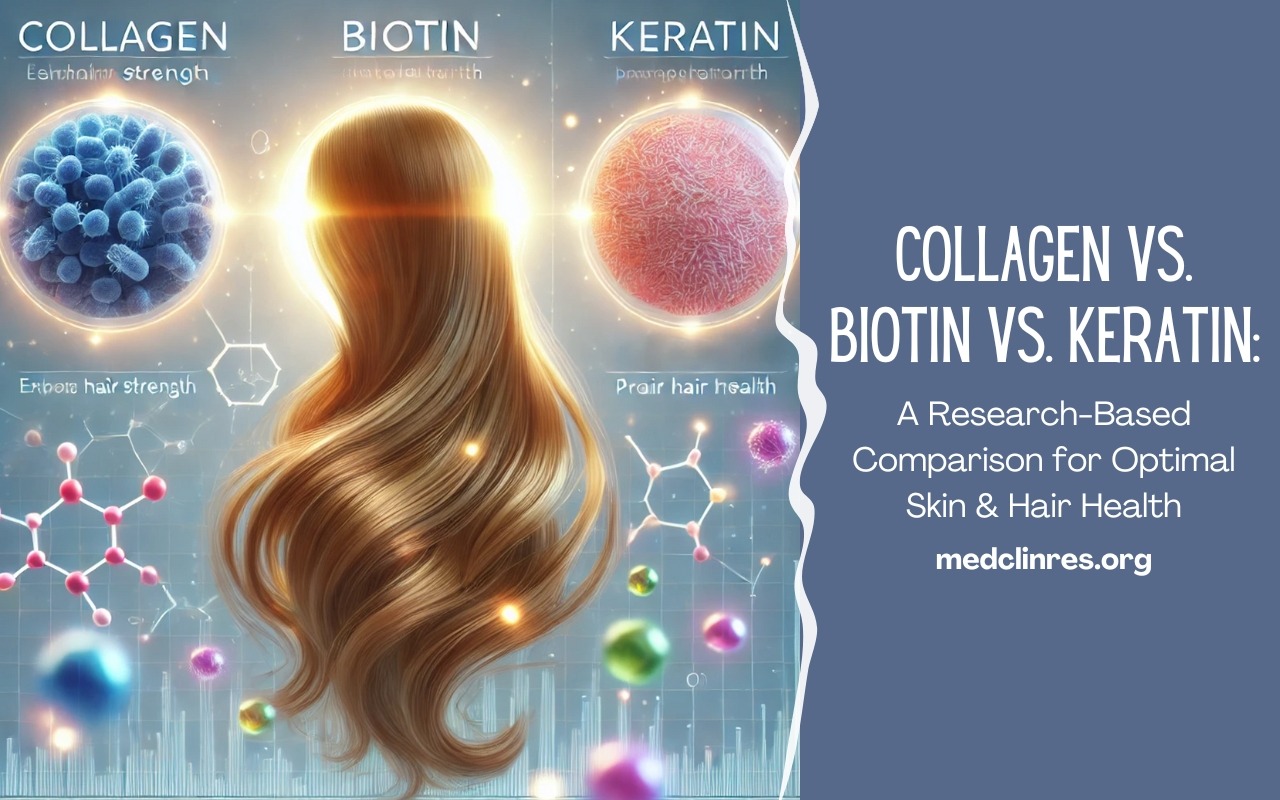
Research Summary: Collagen vs. Biotin vs. Keratin for Hair & Skin Health
Topic Category: Comparative analysis of three hair and scalp health supplements
Primary Active Compounds: Collagen (structural protein), Biotin/Vitamin B7 (B-complex vitamin), Keratin (cysteine-rich protein)
Price Range: Not disclosed
Refund Policy: Not disclosed
Evidence Grade: Moderate — research-based comparison with documented efficacy for hair loss types, though effectiveness varies by genetic and autoimmune factors
Mechanism of Action: Collagen provides structural amino acids for follicles and scalp strength; Biotin supports keratin production and metabolic energy conversion; Keratin enhances hair resilience and shine through cysteine-rich amino acid composition
Safety Considerations: Keratin treatments require adherence to recommended usage guidelines to avoid overuse; consistent supplementation recommended for Collagen and Biotin; approximately 38% of women with hair loss may have biotin deficiency warranting supplementation
Key Takeaways
- Collagen supports hair structure and scalp health, while keratin repairs hair strands and enhances hair smoothness and shine. Biotin enhances keratin production for stronger, thicker hair.
- For improving scalp health and reducing hair thinning/breakage: Collagen; for addressing biotin deficiency or temporary hair shedding: Biotin; for enhancing hair smoothness and protecting against damage: Keratin.
- The effectiveness of these supplements varies for genetic and autoimmune hair loss. Consistent supplementation is key for Collagen and Biotin, while Keratin treatments should be used as recommended to avoid overuse.
Introduction
Hair loss is a widespread issue, prompting many to seek effective treatments to enhance hair health and regrowth. Among the popular supplements are Collagen, Biotin, and Keratin, each offering unique benefits. Collagen supports hair structure and scalp health, Biotin (Vitamin B7) promotes hair growth and thickness, and Keratin enhances hair strength and shine.
This article provides a comprehensive analysis of Collagen, Biotin, and Keratin, exploring their mechanisms, effectiveness for different hair loss types, scientific evidence, usage guidelines, potential side effects, and user experiences. By understanding these aspects, readers will be better equipped to choose the right supplement for their hair loss and regrowth needs.
Overview of Each Supplement
Hair loss can occur due to various reasons, including androgenetic alopecia (genetic hair loss), telogen effluvium (temporary hair shedding), and alopecia areata (autoimmune hair loss). Factors such as genetics, hormonal changes, stress, and poor nutrition can all contribute to hair loss, making it essential to address these underlying causes. Below, we compare the roles and benefits of Collagen, Biotin, and Keratin in supporting hair health.
Collagen vs. Biotin
Collagen and biotin, though both champions of hair health, serve different roles in the body’s complex nutrient matrix. Collagen is a structural protein crucial for maintaining skin and hair integrity, providing essential amino acids for hair growth, and enhancing scalp and follicle strength. Natural sources include bone broth, chicken, and fish.
Biotin, or Vitamin B7, plays a pivotal role in metabolic processes, supporting energy conversion and keratin production. It is particularly beneficial in promoting hair growth, improving strength and thickness, especially in those with a biotin deficiency. Approximately 38% of women experiencing hair loss may have a biotin deficiency, highlighting its importance. Natural sources of biotin include eggs, nuts, seeds, and leafy greens.
Collagen vs. Keratin
While collagen acts as the cornerstone for hair growth by nourishing follicles and the scalp, keratin delivers structural strength and luster. As a primary component of hair, keratin enhances resilience against daily wear and tear. It is rich in cysteine, a sulfur-containing amino acid with antioxidant properties, further fortifying hair against damage. Natural sources of keratin include specific fish, chicken, and eggs.
How Do They Work for Hair Growth?
Understanding how collagen, biotin, and keratin function can help clarify their benefits for hair health and regrowth. Each of these supplements supports hair in distinct ways, addressing different aspects of hair structure and growth processes.
Effectiveness for Different Types of Hair Loss
These supplements primarily target hair loss related to nutritional deficiencies, providing critical nutrients to support hair growth and health. However, their effectiveness varies depending on the specific hair loss condition and underlying causes.
Usage and Dosage
For optimal results, understanding the recommended usage and dosage of collagen, biotin, and keratin is crucial.
Potential Side Effects
While generally safe, collagen, biotin, and keratin supplements and treatments may cause side effects in some individuals.
Conclusion
Collagen, biotin, and keratin offer distinct advantages for improving hair health and addressing hair loss. Selecting the appropriate supplement depends on individual hair loss causes and health needs. Consistent use of collagen and biotin supplements, along with proper usage of keratin treatments, can lead to healthier, stronger hair over time.
Frequently Asked Questions (FAQs)
- Can you take biotin, collagen, and keratin together? Yes, but consult a healthcare provider to ensure proper dosage and avoid potential interactions.
- What is better for thinning hair: biotin or collagen? Both offer benefits—biotin improves hair strength and thickness, while collagen supports scalp health and overall hair structure.
- How long does it take to see results from collagen supplements? Typically, 3-6 months of consistent use are needed to observe significant improvements in hair health.
- Are there dietary restrictions when taking biotin supplements? There are no specific restrictions, but taking biotin with a meal can enhance absorption.
- Can keratin treatments damage hair? Overuse can lead to dryness and brittleness, so follow recommended usage guidelines carefully.
Related: Finasteride vs. Dutasteride
This guide reflects the expertise of the Clinical Research Explained research team, offering a balanced and evidence-based perspective on selecting the right hair health supplements.
*These statements have not been evaluated by the Food and Drug Administration. This product is not intended to diagnose, treat, cure, or prevent any disease. Always consult with a qualified healthcare professional before starting any new supplement or health program, especially if you have existing medical conditions or take prescription medications.
This article is for general information purposes only and does not constitute medical advice. Consult your doctor or qualified healthcare provider before making changes to your health routine.
Related Reading